Stop Building Your Story Bible by Hand
David T. Kim.
September 14, 2026
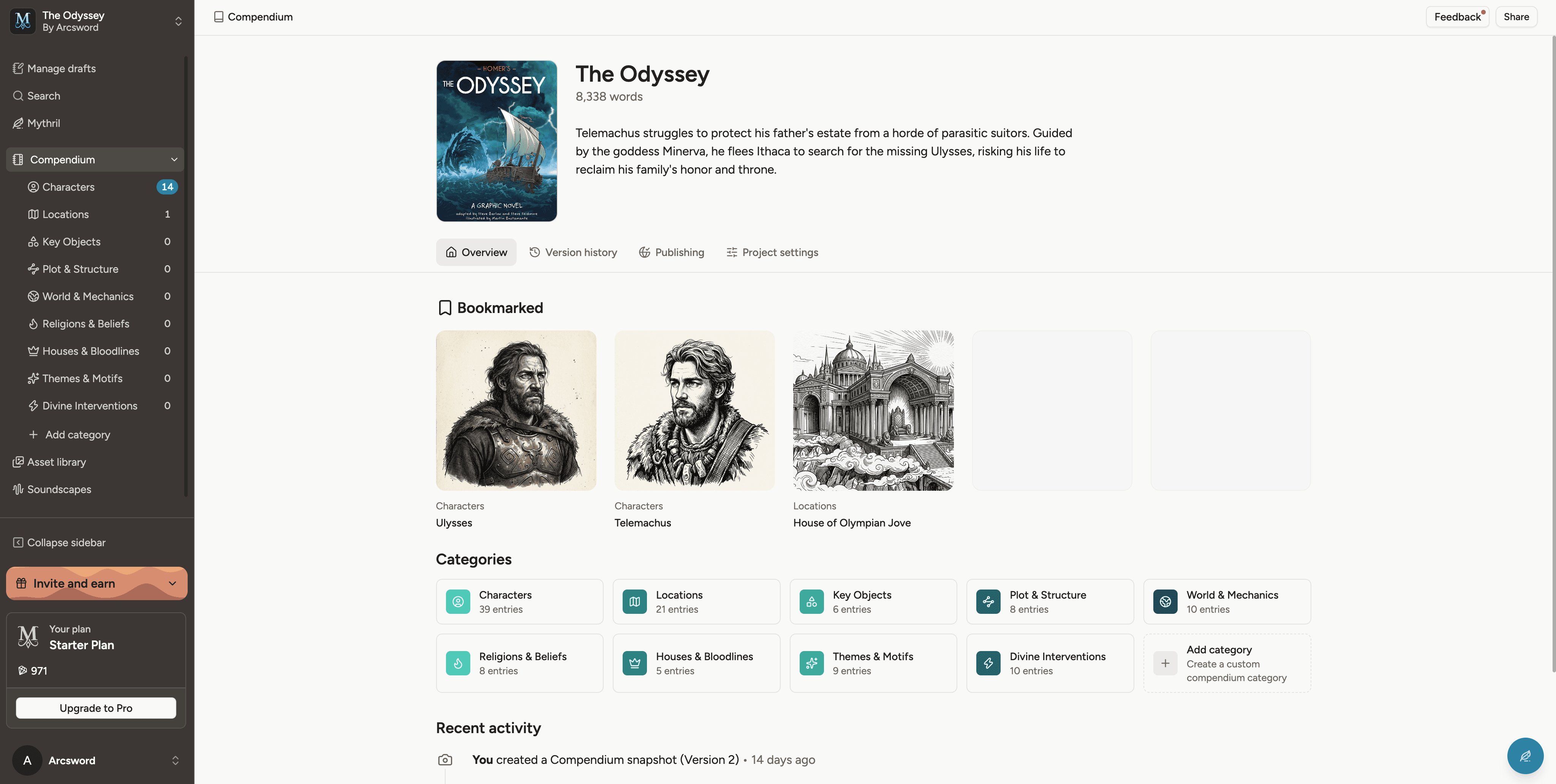
Mythril Compendium built from the story
Nearly ten years ago, I published a sports web novel that reached more than one million readers and led to a licensing deal.
That was also when the world became too large to keep straight.
I was going back through old chapters to check ages, relationships, and decisions I had made months earlier. Writing the next chapter was only half the work. I also had to remember the world behind it.
Writers have long used a story bible for this. In Mythril, we call our version a Compendium.
What is a story bible?
A story bible is a working reference for the world behind a story.
It keeps track of what has already been established. Who the characters are. Where events happened. How people know each other. Which rules hold the world together.
Novelists may call it a story bible or series bible. Game teams sometimes call it a narrative bible or GDD. The name changes, but the job is the same.
It gives the story a memory outside the creator’s head.
Mythril chose the word, Compendium, to describe this key fiction workflow.
The story bible becomes another book
Most story bibles begin as empty templates.
The writer creates a character sheet. Opens another document for places. Starts a timeline in a spreadsheet. Months later, some of it is out of date. The rest is scattered across folders.
The system meant to save time creates more work.
This is especially hard for creators who discover the story while writing it. They do not know every character or rule before the first chapter. The world takes shape on the page.
A useful story bible should follow that work. It should not ask the writer to stop and rebuild the same world somewhere else.
Long stories carry more history
The problem becomes sharper in web novels and long series.
A web novelist may publish several chapters each month for years. A character can leave the story and return long after the writer last thought about them. An object introduced early may become important much later.
Readers remember these things. Sometimes better than the writer does.
Game developers face a similar problem. A world passes between writers, artists, and designers. Everyone needs to understand the same history, even when they are working on different parts of it.
A Compendium keeps those decisions close. The creator can spend less time digging through old work and more time moving the story forward.
Middle-earth could not live in prose alone
Tolkien drew maps as he wrote The Lord of the Rings. He used them to work out where the action took place. The appendices held histories, family trees, calendars, and a chronology of the world.
Those records did not create Middle earth. Tolkien did.
They helped him understand how its parts fit together.
Imagine trying to remember where every member of the Fellowship was at a given moment. Now add generations of family history and several ages of the world.
A world that large needs somewhere to keep its history.
That is the value of a Compendium. Not more lore for its own sake, but a way to remember and find the details with your own editorial staff.
Mythril starts with the manuscript
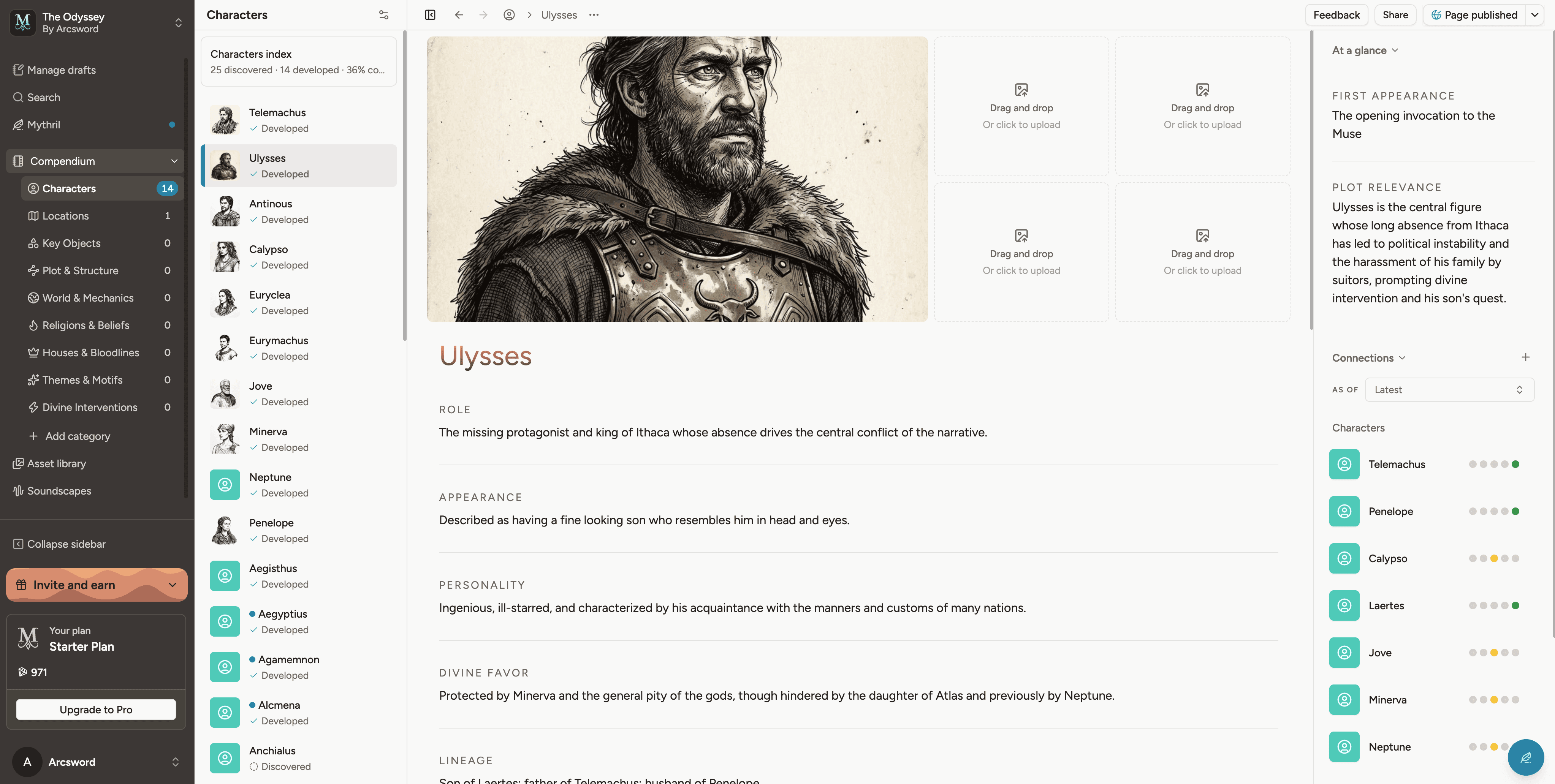
Manuscript to key story elements like characters, relationships, timeline, and lore
Other story bible features still gives the creator an empty place to fill and fail to understand complex relationships of the story elements.
Mythril starts with the manuscript, an early draft, or a group of chapters from a web novel. Mythril reads the story and builds the first version of your Compendium.
Characters receive their own profiles. Events appear in timelines. Relationships connect across the world. Important places and objects become easier to find.
The result is a searchable view of the story behind the prose.
If you need to remember when a character first appeared, you can look them up. If you forgot what happened in a place many chapters ago, you can open its page. If two characters share a history, you can see that connection without searching the full manuscript.
As the story changes, new work can be added. The Compendium moves with the project instead of remaining frozen beside it.
The creator still makes every decision. Mythril keeps those decisions within reach.
A Compendium should not write your story
Other projects often use the term “AI story bible.” We use Compendium because Mythril is not here to write the story for you.
Our job is to understand your work that already exists and organize it into something useful. The Mythril agent carries the heavy load to act as your editorial team.
Mythril uses proprietary custom models and story frameworks built for fiction. The manuscript remains the creator’s work. Mythril does not use creator content to train models without explicit consent.
Nothing becomes public because Mythril found it inside a draft. Your Compendium remains private unless you decide otherwise.
From private Compendium to public Story World
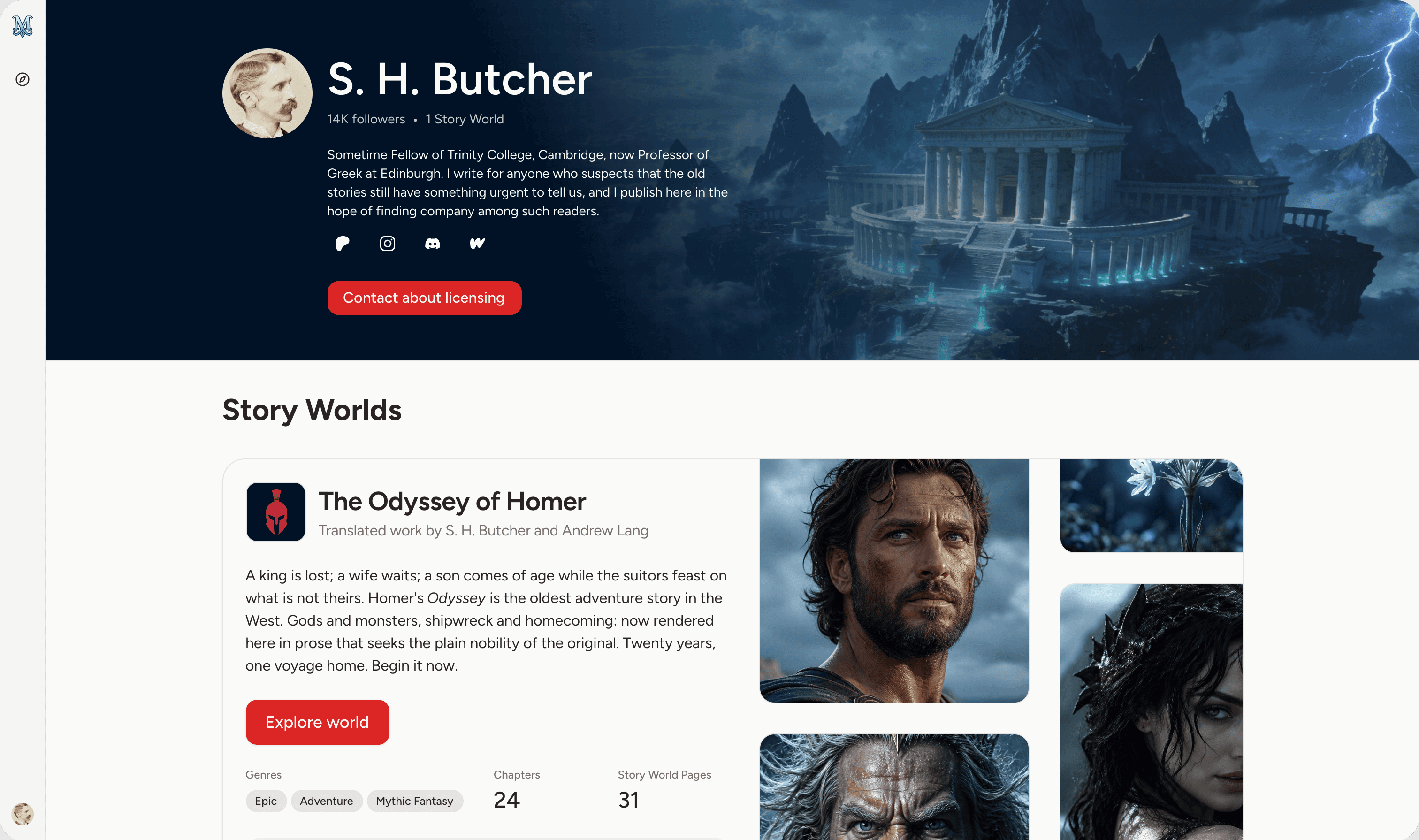
Creators choose which parts of their Compendium fans can explore
Some parts of a fictional world are meant for the creator alone. Others can give fans a way to go deeper.
Mythril lets creators choose which parts of a Compendium become a public Story World. A creator might share a character’s history or open a place for fans to explore.
Private notes and unpublished details remain behind the door.
The Compendium comes first. It helps the creator understand and manage the world. The Story World is what the creator chooses to share.
A place for the world behind the story
A creator should not have to reread half a book to remember one decision. A Compendium should not become another writing project. It should keep the world close, so the creator can return to the real work without losing what came before.
Questions
Is a Compendium the same as a story bible?
It serves the same purpose, but it doesn't begin as an empty template. Mythril builds the Compendium from the manuscripts and notes you have already written.
Do I need to fill in my Compendium manually?
No. You begin with a manuscript, draft, or group of chapters. Mythril organizes what it finds, and you can update the project as your story changes.
Does my Compendium become public?
No. Your Compendium is private. You decide whether to publish selected parts as a Story World.
Does Mythril write the story for me?
No. Mythril organizes and tracks the world you created. The story and its decisions remain yours.